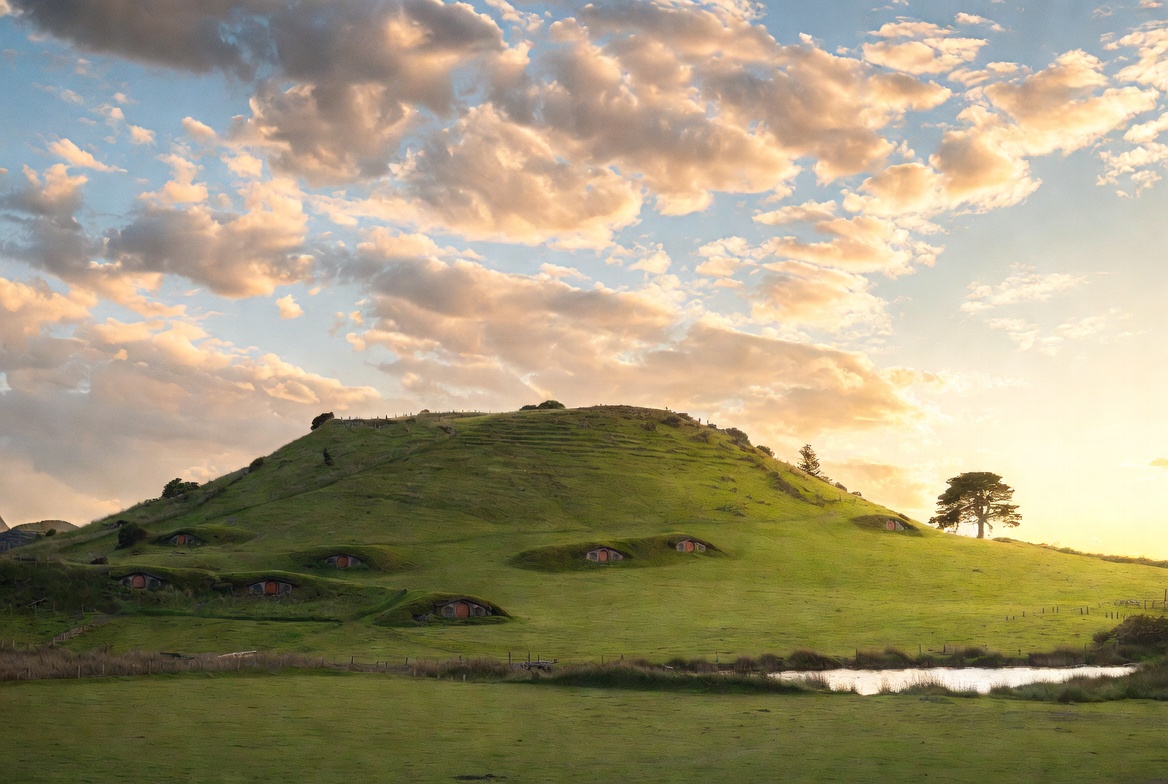
Late 1999. The crew arrived in Matamata for what would be one of the shortest, most intense shoots in modern cinema. The Shire sequences — among the most lyrical in the films — were filmed in roughly twelve weeks.
The first trilogy shot on location at the farm from late 1999. By comparison with the rest of production — which would sprawl across New Zealand for years — Hobbiton itself was a small, tight schedule. The village existed; the gardens had grown in; the weather was the only variable left to manage.
What was filmed there is, on paper, quiet. There are no battles in the Shire. No CGI armies. No mountains crumbling. There is a birthday party, a fireworks display, a few conversations on a doorstep, and a long shot of a cart pulling away down a winding lane. These scenes are nearly all of what audiences come to think of as “home” in the films, which is the heaviest job a location can carry.
Forced perspective and small doors
The trick that made hobbits look like hobbits, on this set, was the doors. Some of the round front doors were built at full human scale; others were built smaller. By placing actors at carefully measured distances from the camera and the door behind them, a six-foot man could read as a four-foot hobbit, and a four-foot stand-in could read as a wizard. None of this is digital. The Shire’s most famous shot — Gandalf’s cart rolling past — uses optical tricks that pre-date computer effects by a hundred years.
“The illusion is in the geometry, not the pixels. Every door at Hobbiton was built to a specific scale for a specific shot.”
The plan was always to leave
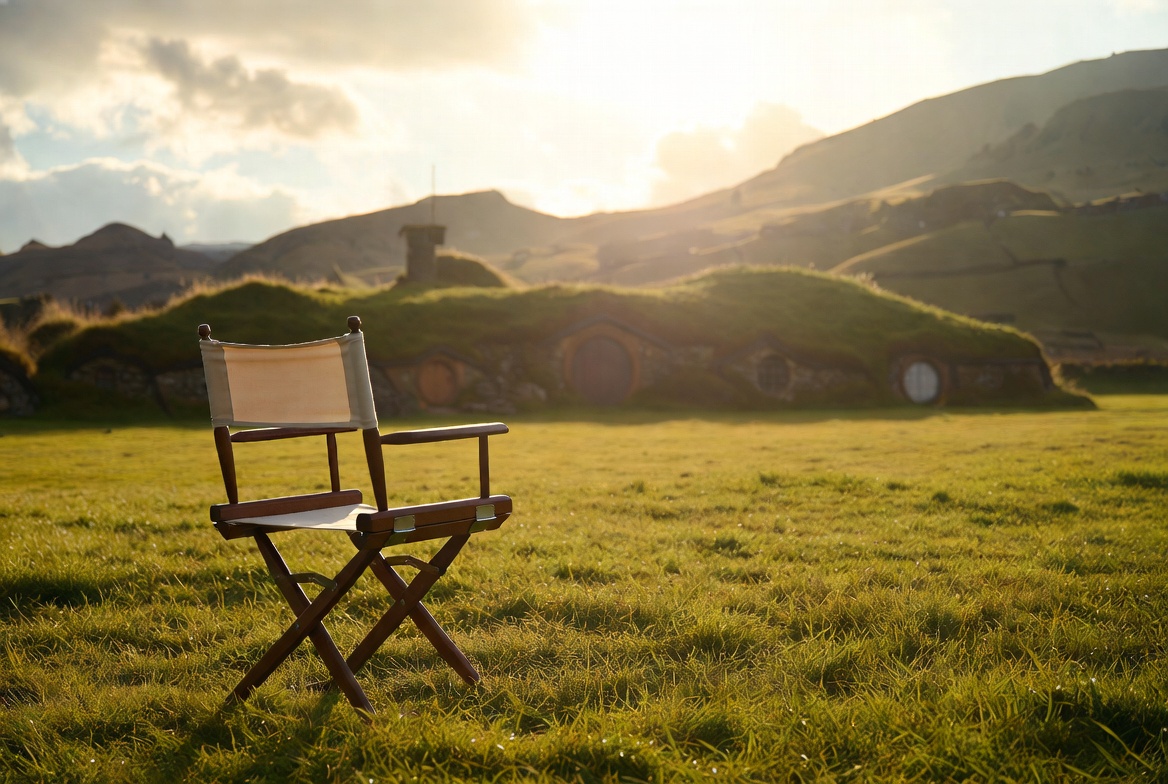
When filming wrapped, the set was meant to come down. Lease terms required restoration. Crews began dismantling the façades — pulling polystyrene from hillsides, lifting fiberglass chimneys, hauling away the wood that wasn’t load-bearing.
And then they stopped. Bad weather rolled in. Some of the demolition was deferred. A few of the more solidly built holes were left in place, pending a return visit. The visit kept getting deferred, too. By the time the trilogy released — and tens of thousands of fans began making pilgrimages to a working farm — the set was in a strange limbo: half-removed, half-standing, beautiful in the rain.
That accident would shape what came next.